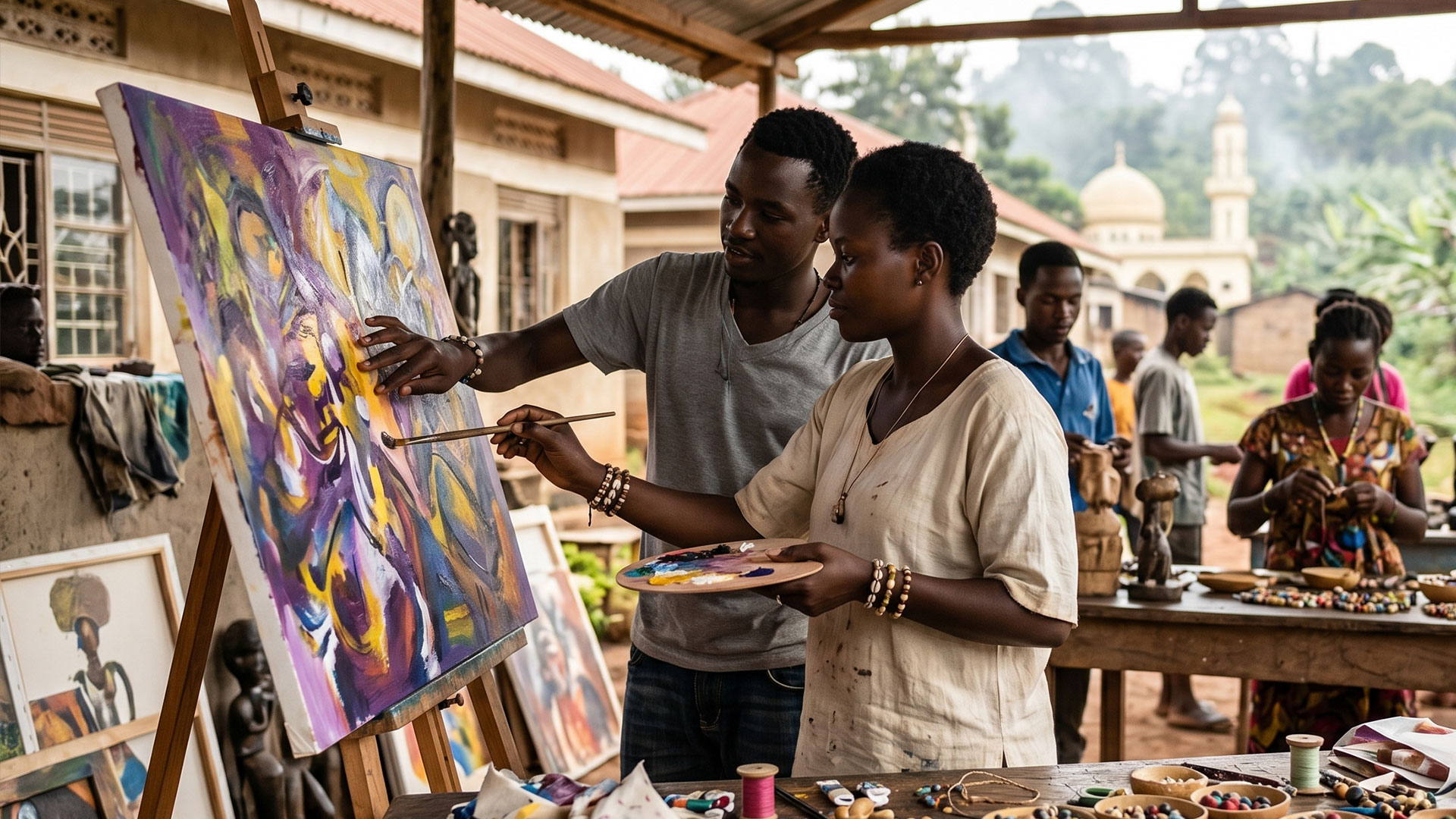
Art Villages and Creative Hubs in Kampala: Exploring Uganda’s Modern Art Scene

Kruti Verma
Date: Nov. 24, 2025
The vibrant city of Kampala is not only Uganda’s political and economic hub, but increasingly its creative heartbeat. Beyond wildlife safaris and lush landscapes, the capital hosts a flourishing modern art scene—galleries, street-art corridors, craft villages and creative hubs that reflect Uganda’s identity, past, present and future.
In this post for The Uganda Blog, we explore how Kampala’s art villages and creative hubs function, how they express the nation’s story, and how visitors can engage meaningfully.
The Rise of Kampala’s Creative Landscape
Kampala has evolved beyond traditional craft markets and folk-art forms to a city where contemporary art, urban muralism, and creative communities take centre stage:
- The Kampala Arts Trust nurtures visual and performance art, positioning Kampala on the African art map.
- The Kampala Art Biennale demonstrates the city’s engagement in global artistic conversation with a strong local footprint.
- Street art and murals are increasingly visible across Kampala’s neighborhoods, turning the city itself into a canvas.
Driving this shift are youthful energy, global connectivity via social media and residencies, and the belief that creative industries are vehicles of identity, reflection, and change.
Key Art Hubs & Galleries Worth Visiting
- Afriart Gallery
Located on 7th Street in Kampala’s Industrial Area, Afriart Gallery has been active since 2002. It represents emerging and established artists from Uganda and Africa, exhibiting works engaging with identity, social issues, and aesthetics. Expect modern painting, mixed media installations, and provocative themes.
- Nommo Gallery
Founded in 1964, Nommo Gallery on Plot 4 Victoria Avenue, Nakasero, bridges traditional and contemporary expression—painting, batik, ceramics, and photography. Visiting offers insight into Uganda’s evolving art identity.
- Street Art & Public Murals
Kampala’s murals and street art are proliferating across neighborhoods. Festivals like the Afri-Cans Street Art Festival have brought graffiti, skate culture, and public art to areas such as Kitintale. Walking through Kamwokya, Kisenyi, or the Industrial Area reveals works depicting hope, struggle, heritage, and modern urban life.
- Craft Villages & Artisan Markets
Craft villages and markets connect visitors to Uganda’s artisanal heritage:
- Buganda Road Craft Market offers handmade jewellery, woven baskets, wood carvings, and bark cloth.
- The Uganda Arts & Crafts Village behind the National Theatre features workshops and craft retail linking tradition with tourism.
How the Art Reflects Uganda’s Identity
Art in Kampala tells stories of Uganda’s history, people, urban transformation, and cultural intersections:
- Tradition meets the contemporary: Traditional craft (basket weaving, bark cloth, beadwork) embedded in modern contexts, mixed media, installations, and digital art.
- Urban life, migration & identity: Artists portray rhythms of urban life, taxi-matatu culture, informal economy, youth culture, and rural-urban migration.
- Social issues & activism: Street art addresses health, equality, environment, and youth unemployment.
- Global-local intersection: Artists exhibit abroad and engage globally while remaining rooted in Ugandan narratives, myths, history, and politics.
Visitor’s Guide: How to Explore the Scene
Plan gallery visits:
- Visit Afriart and Nommo Galleries; talk to staff or artists when possible.
- Check for exhibition openings—many are free and welcoming.
- Ask about emerging artists for experimental work.
Explore street art and neighborhoods:
- Stroll through Kamwokya, Industrial Area, and Kisenyi to see murals.
- Join local street art walking tours.
- Respect neighborhood boundaries.
Visit craft markets & artisan workshops:
- Drop by Buganda Road Craft Market or Arts & Crafts Village.
- Ask artisans about techniques: basket weaving, bark cloth, wood carving.
- Join workshops like batik or pottery to make your own piece.
Engage with creatives:
- Many creatives hang out at cafés or co-working spaces like Wild Coffee near Afriart.
- Attend art events, residencies, and open-mic nights.
- Buy art directly from artists when possible.
Be respectful & curious:
- Art deals with identity, history, and trauma—ask and learn respectfully.
- Acknowledge specific ethnic or cultural origins of crafts.
- Ask permission before photographing murals, especially in informal settlements.
Why This Matters: More Than Just Aesthetics
- Cultural Economy: Creative industries offer jobs and new value chains.
- Identity Formation: Art helps Ugandans articulate who they are.
- Heritage Preservation: Craft villages and workshops keep techniques alive.
- Urban Transformation: Street art transforms spaces and opens conversations.
- Global Representation: Ugandan art challenges stereotypes and highlights sophistication.
Challenges & The Road Ahead
- Limited access to materials, studio space, and international exposure.
- Balancing commerce with authenticity.
- Need for funding, mentorship, and networks.
- Urban pressures may displace creative zones.
- Ensuring artisans earn a living and pass on skills.
A visit to Kampala isn’t complete without engaging with its art and craft world. Wandering through galleries, murals, and artisan workshops allows you to encounter Uganda’s heritage, urban life, hopes, and voices. These living spaces reflect Uganda remembering its past, negotiating its present, and imagining its future. Discover Kampala’s modern art scene and let it tell you a story about Uganda.