

Date: Sept. 1, 2025
When people think of Uganda, they often picture its rolling hills, wild waters, and tropical forests. But beyond the scenic beauty lies a treasure trove of cultural traditions—many of which remain lesser‑known yet incredibly vibrant. I’ve had the chance to visit small villages and meet local makers, dancers, and storytellers who generously shared their heritage. These moments—meeting drummers in a tea plantation, watching women weave drums, tasting fresh millet porridge made from age‑old recipes—show me that Uganda’s cultural spirit is alive, even in its quieter corners.
If you're ready to dig a bit deeper on your travels, here’s a journey through Uganda’s hidden cultural traditions. They may not be covered in guidebooks or bus tours, but they’re experiences that reveal the heart and language of this beautiful country.
In western Uganda, in the villages near Mbarara and beyond, drumming holds more than just rhythm—it carries meaning. I joined a small gathering where men and women played the engalabi drum and the deep-toned omutangira. Each beat, each pause, was a message: a greeting, an invitation to dance, or a way to tell a folktale.
What struck me was how community comes alive through those drums. Onlookers clap along, children watch with wide eyes, and the sun seems to lean in. These aren’t polished performances; they’re shared traditions. If you stand among them, you feel linked—no matter where you’re from.
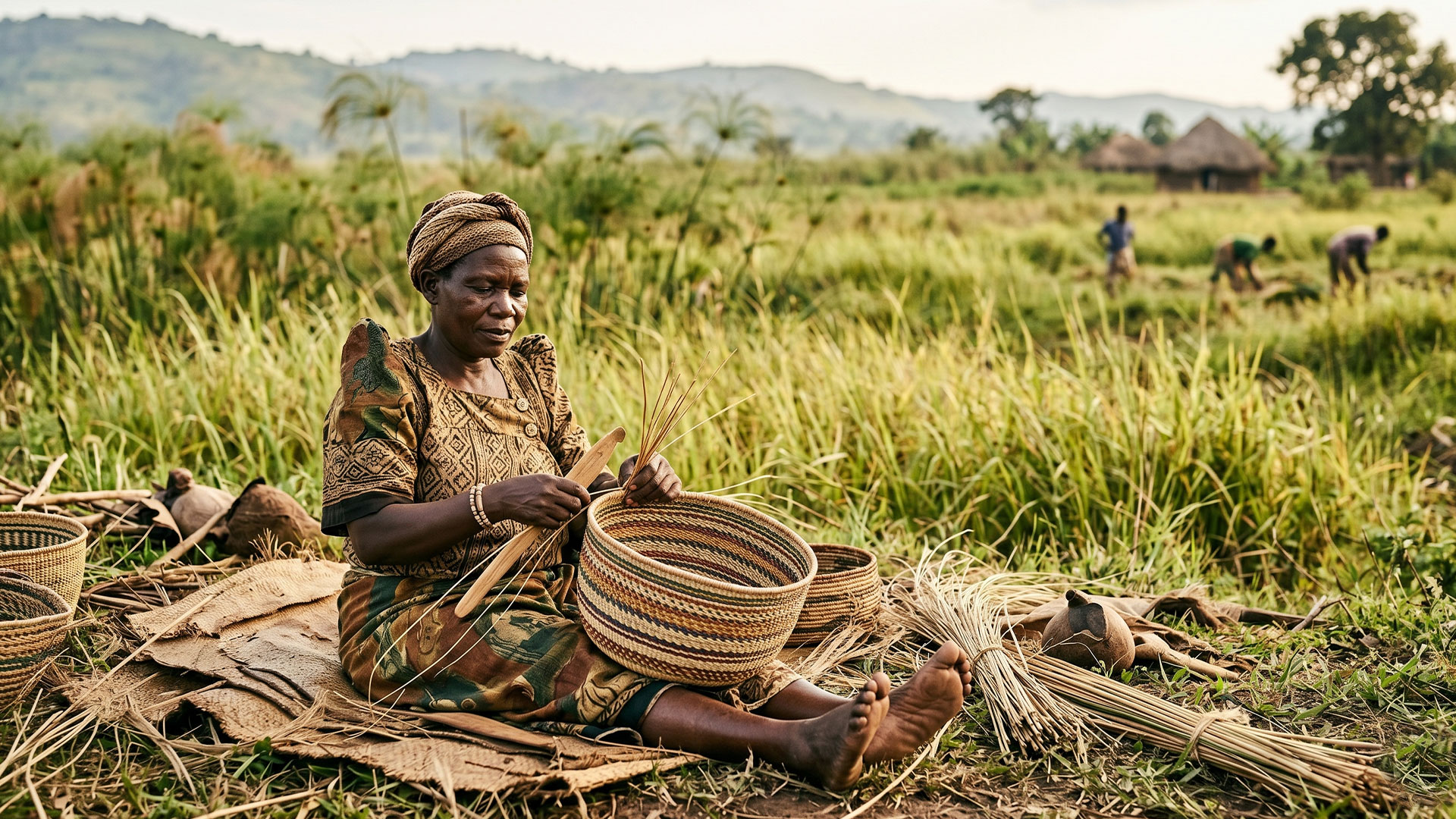
In the eastern regions, women sit on wooden stools, weaving thin reeds into tightly laced baskets called oligo. The patterns are intricate and deliberate—triangles, twists, and repeating diagonal lines that reflect family symbols or ancestral ties.
They craft baskets for keeping millet, winnowing grain, or even serving food during ceremonies. When I held one, I felt the craftsmanship in every flex of fiber. Buying one doesn’t just take home a souvenir—it buys connection to a craftsperson’s years of practice and pride.
On a low terrace outside a home, villagers gather at dusk—old men and women, children and teens all sit in a semi-circle. Without technology, they become the chorus of voices and the flicker of firelight becomes part of the scene.
Then, one starts: the legend of Kintu, Uganda’s first man, the origins of the great rivers, or lessons from ancestral animals. Their voices rise and fall in dramatic turns. When teenage grandchildren chime in, completing the story, I see how traditions stay alive—not just told, but lived. If you invite, they’ll let you join that circle—quietly, respectfully.
Ugandan food isn’t just matoke and groundnuts. In the north, I learned to eat malewa—bamboo shoots boiled with a handful of fresh herbs. The flavor was smoky, herby, hearty—and unlike anything else.
Elsewhere, women serve ofu—millet porridge cooked in banana leaves, fragrant and creamy. They let the steam rise in your face before offering it with a gentle smile. It's simple, local, ancient. Try it, and you taste the land itself.
In remote fishing villages near Lake Kyoga or the Nile banks, I once joined a wedding by the river. There wasn’t a huge hall or loud DJ—just the water as a soundtrack, women singing acapella, and fishermen helping with arrangements. The bride’s dress was beaded but homemade, and cooking was under al fresco pots, shared by families.
There was no rush, just shared joy under the open sky. And the elders blessed the couple with gentle songs. A wedding doesn’t need grandeur to be grand. It just needs a shared heart—and that day showed me exactly that spirit.
In parts of western Uganda, I watched women working on traditional looms to weave kitengi–like cloth, but using local organic cotton and dyes from roots, indigo, or avocado pits. Their fingers moved in rhythm—pull, beat, pull. Motifs emerged: hills, coffee beans, local birds.
Every cloth they wove was for their own wear, or for a neighbor, or occasionally sold at a surface market—not as a tourist trinket, but as a piece of fabric that tells a story of home, of daily life. Imagine wearing a cloth that holds the rhythm of daily sunrises and markets and smiles.
In villages at dawn, I noticed how chores are little ceremonies: fetching water from a nearby stream, silent greetings exchanged between women balancing jerrycans, pots bubbling over small fires. There’s music in the murmuring water, clinking of metal, soft footsteps in dust.
These mornings show you that daily life in Uganda is cultural motion—shared, slow, alive. If you walk quietly and ask to join, someone might hand you a jerrycan or offer you tea while the world wakes together.
Uganda’s lesser-known traditions—drum circles, basket weaving, porridge by dawn, cloth on looms, wedding songs by rivers—echo with quiet power. They ask you to breathe, to watch, to learn. They don’t armor their stories; they softly share them, with trust.
So, when you explore Uganda next, listen for its quieter rhythms—and if you're invited to sit, do. You’ll bring home more than photos. You’ll bring home trust, memory, and a shared heartbeat.
Let me know if you’d like help planning an authentic cultural stop or connecting with positive local guides—I’d be glad to help you experience this beautiful side of Uganda.