

Date: June 30, 2025
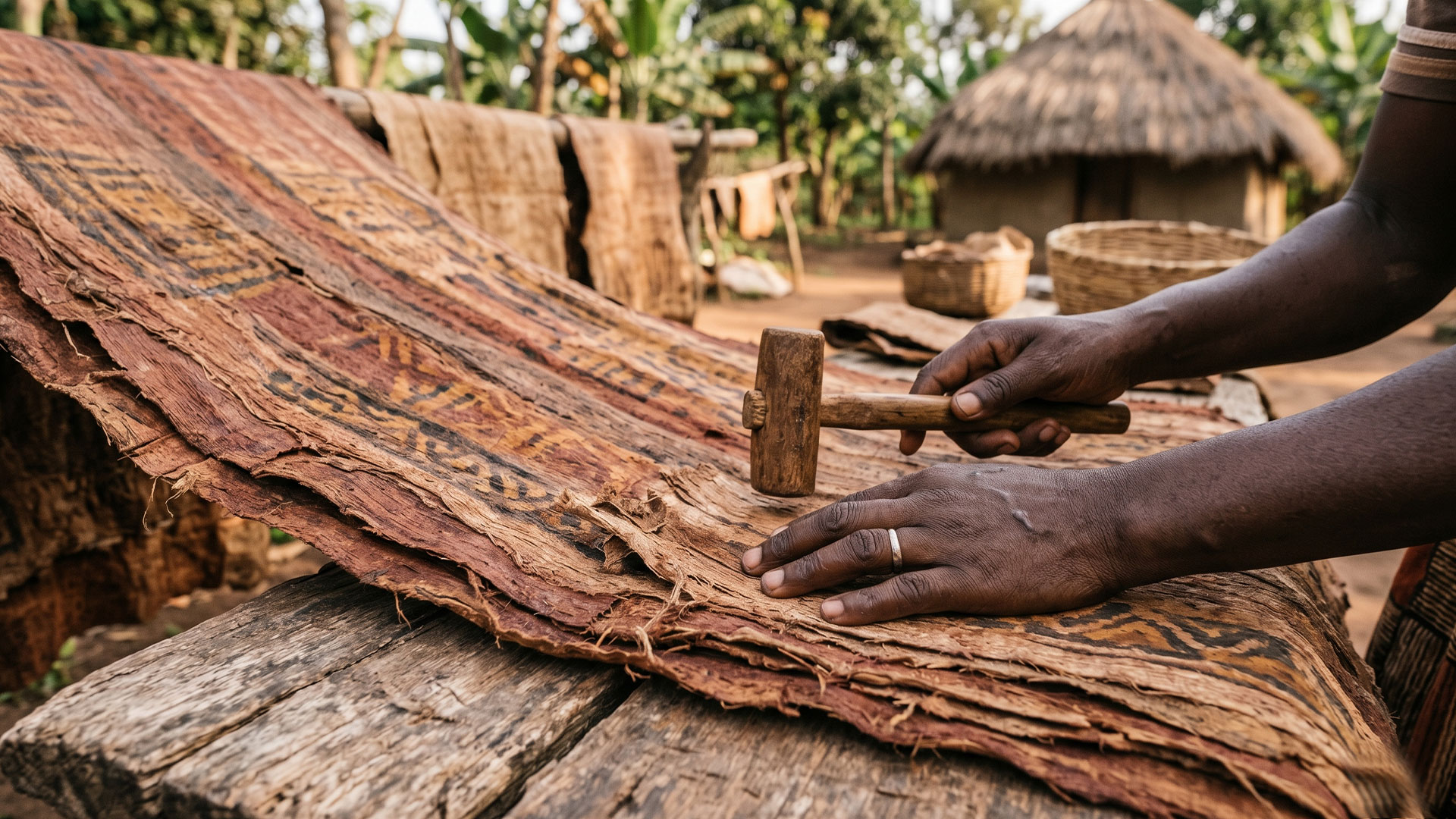
When we talk about Uganda’s rich culture, one item that stands out is the bark cloth. This simple but beautiful fabric, made from tree bark, has been part of Uganda’s identity for hundreds of years. It's not just cloth—it’s a story of tradition, skill, and pride.
Bark cloth, or "Olubugo" in Luganda, is more than just material for clothes or decor. It carries deep cultural meaning, especially among the Baganda people, one of the largest ethnic groups in Uganda.
What is Bark Cloth?
Bark cloth is a handmade fabric made from the inner bark of a special tree called the Mutuba tree (Ficus natalensis). This tree grows naturally in central Uganda and is valued not only for its bark but also for its role in the environment.
The tree isn’t cut down to make the cloth—only the bark is removed, and the tree grows back again, making the process sustainable and eco-friendly.
The History Behind Bark Cloth
The art of making bark cloth in Uganda goes back over 600 years. It was once the main fabric used for clothing in Buganda, the kingdom in central Uganda. Kings, chiefs, and even everyday people wore it with pride.
Bark cloth was linked to royalty, religion, and traditional ceremonies. The Kabaka (king) of Buganda had special bark cloth robes, and it was used in events like births, funerals, and weddings.
Though modern fabrics like cotton are used today, bark cloth still holds a strong place in Ugandan culture.
How Is Bark Cloth Made?
Making bark cloth is a skilled art passed down through generations, mostly among male artisans known as “bark beaters.”
Cultural Uses of Bark Cloth
Why Bark Cloth is Special
Bark Cloth Today – Modern Uses
Where to Find Bark Cloth in Uganda
Bark cloth is more than fabric. It is a living tradition, a symbol of identity, and a powerful reminder of how culture and nature can work together.
From ancient ceremonies to fashion runways, this timeless material continues to grow — just like the trees it comes from.
When you hold bark cloth, you hold Ugandan history, nature, and heart. So, when you visit Uganda, take home not just a souvenir — but a story.