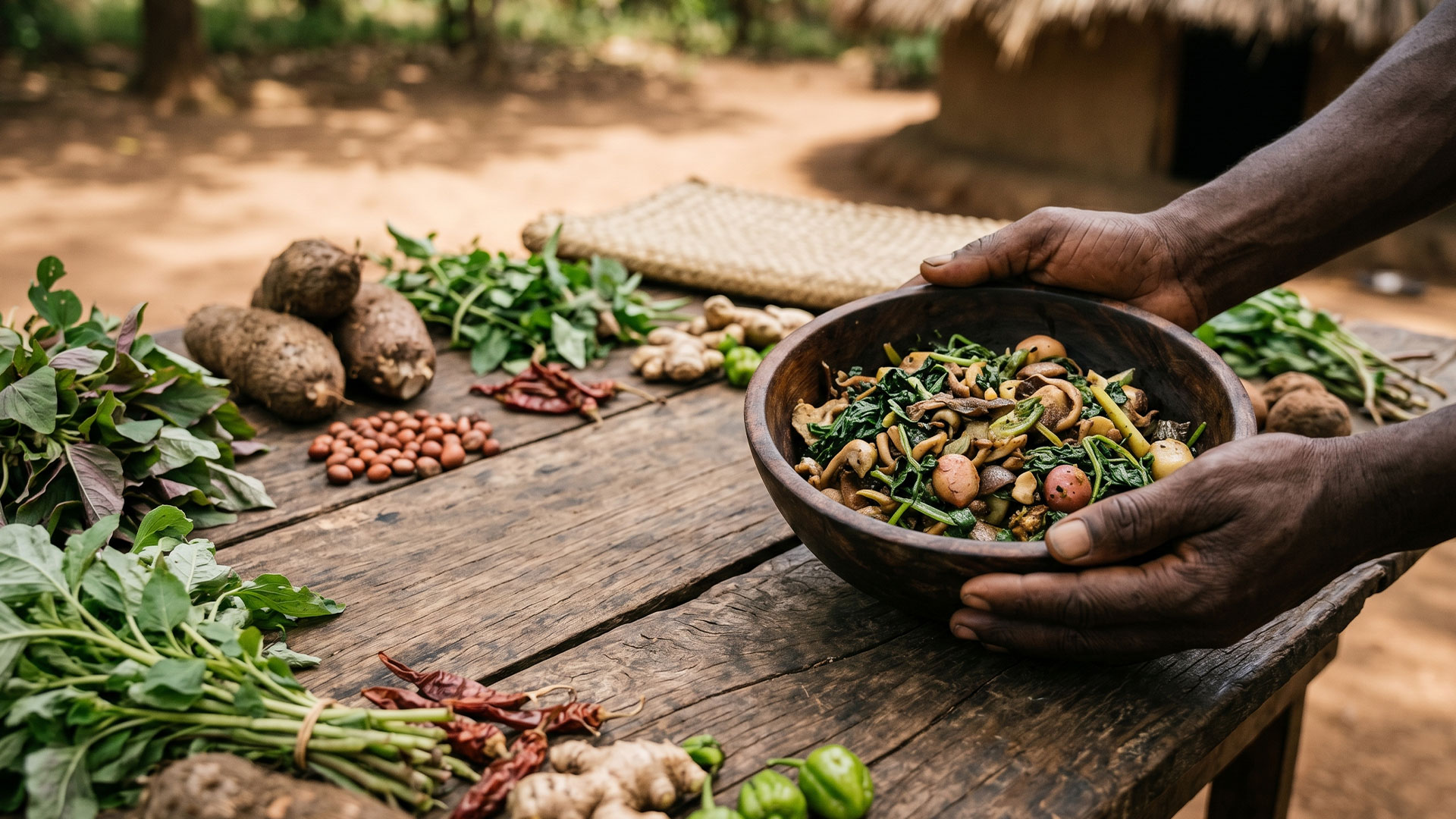
Foraging & Wild Foods of Uganda: Edible Forests, Bush Snacks & Local Survival Cuisine

Kruti Verma
Date: Oct. 20, 2025
There is something beautiful about walking through a forest or bush in Uganda, and everywhere you look, food is hiding. Leaves, fruits, roots, seeds, even flowers—so many plants offer nutrition, taste, and culture. For many Ugandans, wild foods are part of daily life. For some, they are survival foods in bad seasons. For others, they are bush snacks on a walk, or foods that connect them with nature, heritage, and old ways.
This post explores foraging and wild foods in Uganda: what kinds of wild edible plants exist, where they are found, how people use them, what benefits they bring, and how the tradition is changing. May this inspire you—whether you live near forest, reserve, bush, or even in the city—to know more, try more, preserve more of these wild treasures.
What Are Wild Foods & Foraging?
Wild foods are plants, fruits, leaves, roots, seeds, or mushrooms (or sometimes insects) that grow naturally—not planted, or not fully domesticated. They are collected from forests, bush, savannah, roadside, forest edges, or other wild areas.
Foraging is the act of going out into nature or bush and collecting those wild foods for eating. Sometimes people do it as a habit, culture, survival, or when cultivated food is scarce.
Local survival cuisine refers to the ways communities use wild food to survive hard seasons (droughts, famine, food shortage) or simply to supplement what they farm. It also means knowing how to cook them, preserve them, prepare them safely and in tasty ways.
Uganda’s Wild Food Richness
Uganda has many kinds of ecosystems—savannah, rainforest, woodlands, forest reserves, wetlands. Many communities still know many wild edible plants. Several scientific studies have recorded these.
- In Acholi sub‑region (Northern Uganda), a study found 73 wild / semi‑wild edible plants from 39 plant families.
- In Teso‐Karamoja region, communities living near forest reserves reported 100 wild edible plant species from 47 families.
- In Obalanga sub‑county, Amuria district, a farming community had 51 species from 32 families of wild edible plants used.
- In Mabira Central Forest Reserve area, people in neighbouring villages still collect wild foods, both for taste and survival.
So Uganda is rich in wild edible plant diversity. But many plants are used only when needed. Many are local, not widely known outside their area. Traditional knowledge is strong among older people; younger may know less.
When & Where Wild Foods Are Collected
- Season matters: Many wild foods are more available in rainy season. Fruits drop, plants grow, leaves are lush.
- Forest reserves, woodlands, bush edges: Rich in edible plant species.
- Proximity to village matters: If people live close to forest or trails, access is easier.
- Knowledge & culture: Elders and those from forest areas know the plants well. This knowledge is at risk of being lost.
Why Wild Foods Are Important
- Nutrition: Rich in vitamins, minerals, and micronutrients.
- Food security: Provide backup when crops fail.
- Cultural identity and heritage: Part of traditions, ceremonies, and local medicine.
- Economic value: Sold in local markets, traded.
- Biodiversity value: Foraging encourages conservation of natural areas.
How People Prepare Wild Foods
- Raw / fresh snacks: Eaten directly from plants.
- Boiling / cooking leaves: Often mixed with peanut paste.
- Smoking or drying: Used for preservation.
- Sauces / stews: Mixed with staple foods.
- Juices, traditional drinks: Made from tamarind and other fruits.
- Simple roasting or grilling: For roots or seed pods when edible.
Examples: Wild Foods & Bush Snacks
- Malewa: Smoked bamboo shoots from Mt. Elgon area.
- Cleome gynandra: Wild green, boiled and mixed with peanut paste.
- Tamarindus indica: Tamarind fruit, sour and used in drinks or sauces.
- Carissa spinarum: Wild shrub with edible fruits.
- Vitex doniana: Wild fruit tree in Acholi region.
- Saba comorensis: Wild fruit also noted in Acholi studies.
Risks & Challenges
- Poisonous look‑alikes: Some wild plants can be toxic.
- Seasonal availability: Many wild foods are not available year-round.
- Declining knowledge: Knowledge is being lost among younger people.
- Environmental degradation: Forest loss reduces availability.
- Overharvesting: Unsustainable practices may harm ecosystems.
- Health & safety: Risk of pesticides or contamination near farms.
How Foraging & Wild Foods Are Part of Local Survival Cuisine
- Famine seasons: Wild foods act as safety nets during hardship.
- Supplementing household diet: Adds nutrition and diversity to meals.
- Low cost: Wild foods are freely available to gatherers.
- Cultural ceremonies & tradition: Some wild foods are central to events.
- Medicinal overlap: Many edible plants are also used in healing.
How Urban & Younger People Can Connect with Wild Foods
- Learn from elders and family.
- Join foraging walks and trips.
- Visit botanical or edible gardens.
- Save and plant wild seeds near home.
- Dry and preserve wild foods.
- Look for wild items in urban markets.
Conservation & Revival: Why It Matters
- Health & nutrition: Wild plants offer essential nutrients.
- Cultural heritage: Preserving foraging preserves traditions.
- Resilience to climate change: Wild foods provide fallback during crop failure.
- Biodiversity conservation: Encourages care for forests and wild zones.
- Economic opportunities: Wild foods can support small businesses and ecotourism.
Some Tips for Safe and Sustainable Foraging
- Be sure of plant identity before eating.
- Pick only what is needed.
- Allow plants to seed and regenerate.
- Wash and cook as needed for safety.
- Preserve foods through drying or smoking.
- Respect local rules and protected areas.
Challenges To Reviving Wild Foods Use
- Loss of knowledge across generations.
- Urbanization reduces contact with wild foods.
- Forest loss and land changes impact wild habitats.
- Low market value and lack of investment.
- Policy gaps in supporting wild food systems.
Ideas & Ways Forward
- Document traditional knowledge.
- Include wild foods in school nutrition programs.
- Create community foraging groups.
- Promote wild edible gardens.
- Support local wild food markets and value addition.
- Research wild food nutrition data.
- Conserve forest, bush, and woodland areas.
- Celebrate wild food traditions via festivals and media.
Uganda’s wild foods are treasures hidden in forests, bush edges, near homes, carried by tradition and stories. They are food, medicine, culture, survival. They are flavours of childhood for many; safety nets for others; hope for healthier diets for all.
Foraging is more than collecting wild fruits—it is connecting with land, with elders, with knowledge, with resilience. Whether you live near Mabira, in Teso, Karamoja, Acholi, Bugisu, or any part of Uganda, there are wild foods waiting to be known, tasted, preserved.
Let us remember: every bush fruit, leaf, root has a story. Every tale of foraging carries heritage. Let us not lose them. Let us eat, preserve, pass on, and celebrate wild foods.