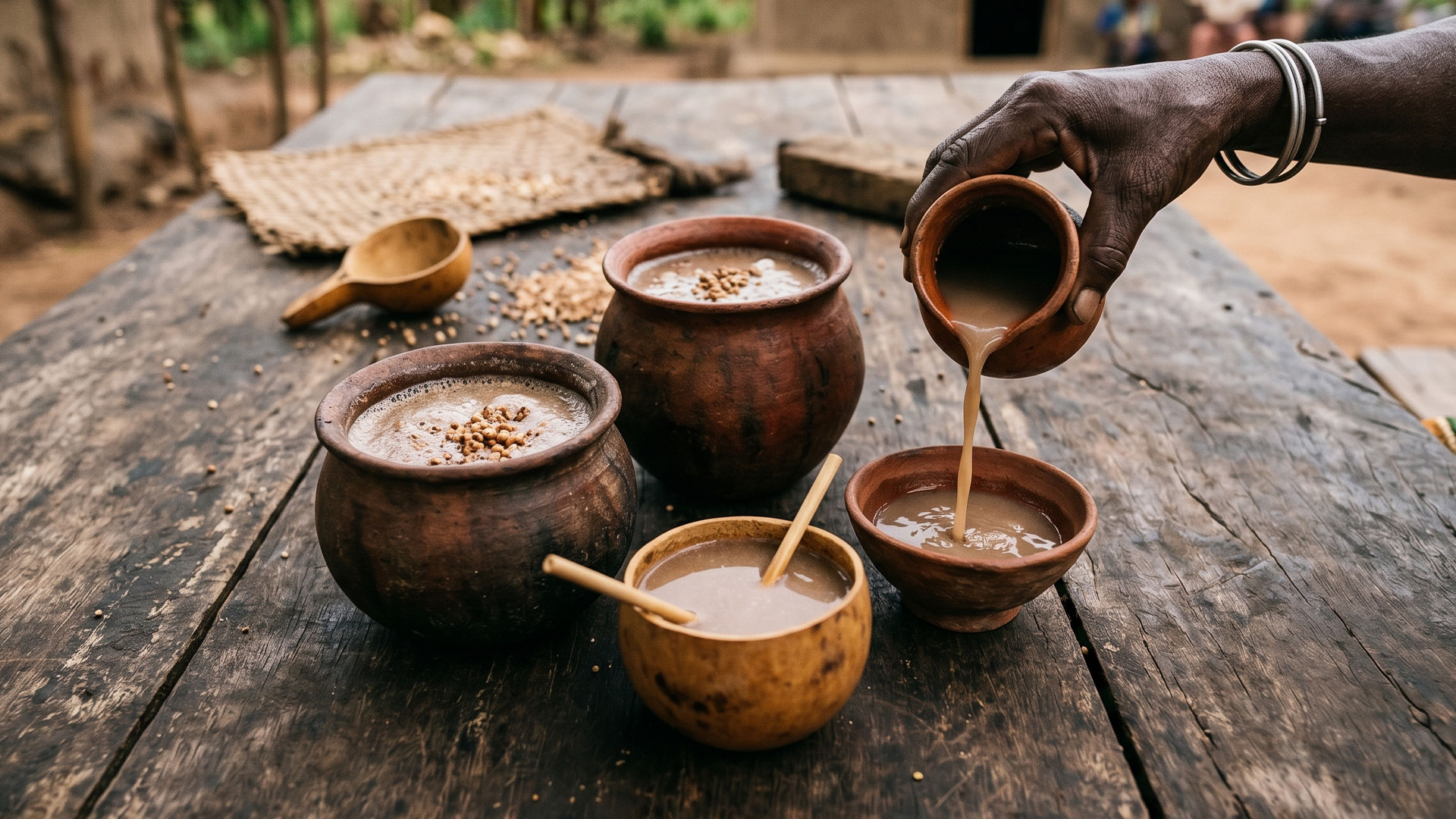
Traditional Beverages of Uganda Local Drinks, Their Cultural and Historic Relevance, and How to Try Them

Admin
Date: Dec. 15, 2025
Uganda is a country rich in culture, nature, and history — and its traditional drinks are a reflection of this heritage. From local villages to bustling towns, Ugandans have been enjoying unique beverages for centuries. These drinks are not just refreshing; they hold cultural, social, and historical significance.
In this article, we explore the most popular traditional beverages in Uganda, their cultural meaning, and how you can experience them when visiting. Whether you want to taste fermented millet drinks, palm wine, or modern twists on old classics, Uganda offers something for everyone.
- Introduction to Ugandan Traditional Beverages
- Fermented drinks – alcoholic or slightly alcoholic drinks made from grains or fruits
- Non-alcoholic drinks – natural drinks made from herbs, fruits, or roots
- Medicinal or ritual drinks – beverages used for cultural or healing purposes
These drinks represent social life, rituals, and hospitality. Sharing a drink is a symbol of respect, friendship, and community.
- Popular Traditional Ugandan Beverages
- Waragi – The National Spirit
- Made from bananas, millet, or cassava, depending on the region
- Often distilled in small local communities
- Traditionally used in ceremonial and social gatherings
- Sometimes infused with herbs for medicinal purposes
Cultural Significance:
- Served during weddings, funerals, and celebrations
- Drinking together symbolizes friendship and respect
- Some elders still use waragi in rituals or spiritual ceremonies
- Malwa – Traditional Beer
- Common in central and northern Uganda
- Made by fermenting millet or sorghum for a few days
- Has a slightly sour, refreshing taste
- Traditionally served in communal gatherings
Cultural Importance:
- Central to Buganda and other ethnic celebrations
- Used in rituals like marriages and ancestor ceremonies
- Drinking Malwa together strengthens community bonds
- Tonto – Banana Beer
- Made by fermenting ripe bananas with water
- Can be mildly alcoholic
- Known for its sweet and slightly tangy taste
Cultural Significance:
- Traditionally brewed at home for weddings, births, and festivals
- A drink that represents community spirit and hospitality
- Older generations pass the brewing technique to younger family members
- Palm Wine (Lubisi or Embeera)
- Harvested from different palm species across Uganda
- Fermented naturally to create a sweet, slightly alcoholic beverage
- Has a light fizz and unique aroma
Cultural Significance:
- Central to many cultural rituals in northern and eastern Uganda
- Shared during traditional ceremonies, festivals, and storytelling sessions
- Drinking palm wine is an experience of community bonding
- Buganda Tea and Herbal Drinks
- Made from local herbs, leaves, and roots
- Often consumed for health benefits or ceremonial purposes
- Popular herbs include lemongrass, ginger, hibiscus, and local medicinal plants
Cultural Importance:
- Herbal drinks are used for healing, detoxification, or spiritual rituals
- Drinking herbal tea is considered therapeutic and calming
- How These Drinks Reflect Culture
- Community and Social Bonds: Many drinks are served in shared pots or cups; drinking together represents unity, respect, and friendship
- Hospitality: Offering drinks to guests symbolizes respect and warmth
- Ceremonial Roles: Part of marriages, naming ceremonies, and funerals; carry spiritual and ritual importance
- Connection to Nature: Made from locally sourced ingredients like bananas, millet, sorghum, or palm sap
- Brewing Techniques and Traditions
- Fermentation: Millet, sorghum, and bananas fermented naturally using local yeast; creates alcohol, tanginess, and aroma
- Palm Wine Tapping: Sap collected carefully from palm trees; fresh sap ferments quickly; local knowledge ensures sustainability
- Herbal Infusions: Leaves, roots, and flowers boiled or steeped; used for health or spiritual benefits
- Where to Try Traditional Beverages in Uganda
- Local Villages: Families welcome visitors; offers storytelling and cultural learning
- Traditional Restaurants and Huts: Cities offer Malwa, Tonto, and herbal drinks; sometimes paired with traditional snacks
- Festivals and Cultural Events: Festivals include drinks, rituals, dances, and traditional attire
- Tours and Homestays: Visitors can learn brewing techniques and take part in the full cultural experience
- Health and Medicinal Benefits
- Herbal teas support digestion, reduce inflammation, and boost immunity
- Millet and sorghum drinks are rich in nutrients and energy
- Banana beer and palm wine contain vitamins and minerals in small amounts
- These drinks are often safer and healthier than processed alcoholic beverages
- Modern Adaptations and Fusion Drinks
- Tonto cocktails and banana beer smoothies
- Palm wine with added fruit flavors
- Herbal tea lattes and infused drinks
These innovations keep tradition alive while appealing to urban youth and international tourists.
- Cultural Etiquette Around Drinks
- Always accept drinks politely
- Sharing drinks with elders is a sign of respect
- Avoid waste; drinks are precious and made carefully
- Ask for guidance on drinking palm wine
- Economic and Tourism Opportunities
- Local Breweries and Cafés: Small breweries producing Malwa, Tonto, and herbal drinks for locals and tourists
- Cultural Tourism: Tours, homestays, and demonstrations generate income for rural communities
- Export Potential: Bottled Waragi, herbal teas, and banana beverages gaining popularity internationally
- Skill Development: Learning traditional brewing creates jobs for youth
Uganda’s traditional beverages are more than drinks — they are a window into history, culture, and community life. From Malwa and Tonto to palm wine and herbal teas, these beverages tell stories of social bonds, hospitality, and connection to nature. They offer authentic experiences for visitors while preserving heritage.
By exploring these drinks, travellers gain more than refreshment; they gain a deeper understanding of Ugandan life and tradition. Uganda’s traditional beverages are alive, flavorful, and waiting for everyone — whether you are a visitor seeking new tastes or a local connecting with your roots.
So next time you visit Uganda, take a sip of history, culture, and community in every drink.