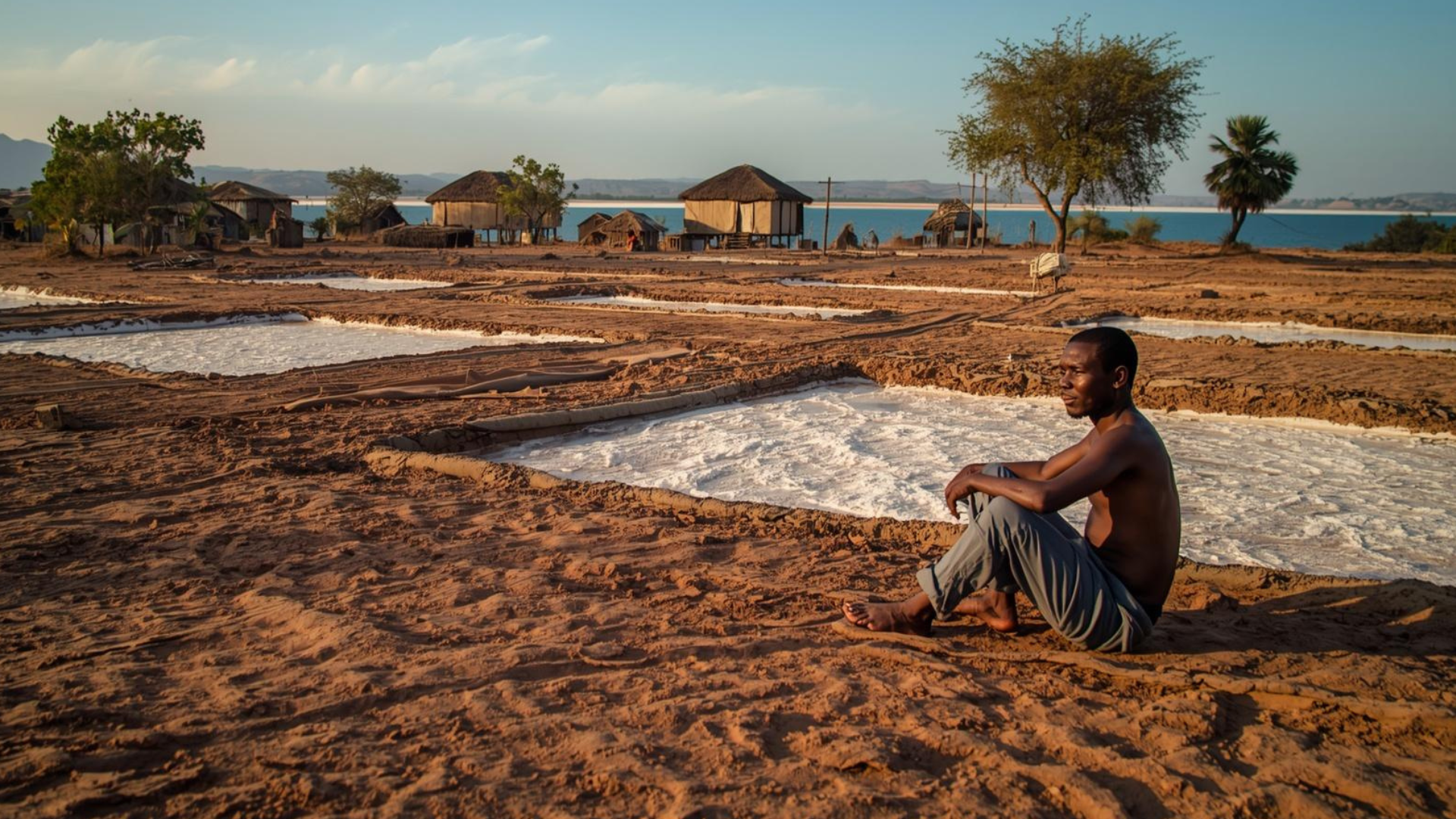
Discovering Kibiro Salt Gardens — Traditional Salt Village on the Shores of Lake Albert, Uganda

Kruti Verma
Date: Nov. 3, 2025
Introduction
In the rugged escarpment of Uganda’s western Rift Valley lies one of the country’s most unique cultural-and-nature destinations: the Kibiro Salt Gardens. Nestled on the south-eastern shore of Lake Albert in the Bunyoro region, about 35 km from Hoima town, the village of Kibiro is home to a salt-extraction tradition that has persisted for 800–900 years. This blog post invites you to explore Kibiro—its landscape, its extraordinary salt-making craft, its people, its cultural significance, and how you can visit respectfully.
1. Location & Setting
Kibiro is located in Kigorobya sub-county, Hoima District, in the Bunyoro sub-region of Western Uganda. The village belts the escarpment of the Western Rift Valley, down to the shores of Lake Albert. The location is dramatic: a steep escarpment, salty soils instead of fertile farmland, hot springs, and the shimmering lake.
Standing on top of the escarpment before descending down to the village gives a magical view of Lake Albert.
Because the soils are salty and sandy, agriculture is almost impossible in many parts of the area; instead, the community relies on salt production and fishing.
2. What Are the Salt Gardens?
At a glance, these are plots of soil and spring water where women extract salt using a locally-evolved technique.
The process
- Salty water from hot springs or channels flows over or through salty soils (due to geothermal and rift geology).
- In designated “gardens” women scrape, spread, heap and dry the soil over days/weeks to draw out the salt via capillary action.
- The soil/leach solution is collected, filtered and boiled (or sun-dried) to produce salt crystals, often shaped into cones.
- The residual soil is then reused and the cycle continues—making the salt gardens sustainable.
Unique aspects
- Women’s heritage: Salt extraction at Kibiro is exclusively done by women, with matrilineal ownership.
- Living tradition: The site is on the UNESCO tentative list, recognised for cultural significance.
- Salt and trade: Salt is traded locally and across borders, often through barter.
3. Why It’s Worth Visiting
- Cultural depth & heritage
Few places in Uganda offer a craft that has continued for nearly a millennium. The salt gardens demonstrate adaptation to a challenging environment, with rich archaeology and legends tying the present to the past.
- Scenic, off-the-beaten-path environment
The escarpment, lake, and hot springs create a distinctive sense of place. Visiting Kibiro is both adventurous and authentic.
- Unique livelihood story
Visitors can see salt extraction, meet women salt-gardeners, and learn heirloom techniques.
- Potential for respectful tourism
Kibiro’s remoteness offers an authentic community experience, though facilities are limited.
4. Practicalities — Visiting Kibiro
Getting there
- About 30–35 km from Hoima by road plus footpath down the escarpment.
- 4×4 vehicle recommended; terrain is steep and dusty.
- Hike requires time, good shoes, and fitness.
What to see & do
- Observe salt-making process with local guides.
- Visit hot springs and salty channels.
- Explore the village landing site and salt market.
- Enjoy Lake Albert’s shore and fishing life.
- Buy locally produced salt as a souvenir.
When to go
- Dry season is best for salt production.
- Plan for a full-day trip or stay overnight in Hoima.
Accommodation & facilities
- Better accommodation options in Hoima town.
- Bring water, snacks, sunscreen, insect repellent, sturdy shoes, and hat.
- Respect limited local facilities.
Visitor conduct & respect
- Ask permission before taking photos.
- Respect cultural norms—salt gardens are women’s domain.
- Keep environmental impact low.
- Be mindful of fragile escarpment ecosystem.
- Approach with curiosity and respect.
5. Challenges & Conservation Issues
- Climate pressure: Gardens face erosion, lake level rise, and heavy rains.
- Livelihood vulnerability: Reliance on salt and fishing makes income seasonal.
- Lack of infrastructure: Limited roads, accommodation, and visitor facilities.
- Market access: Difficulty reaching wider markets.
- Heritage preservation: Need for better protection and recognition as a UNESCO site.
6. Sample Itinerary Suggestion
- Depart Hoima early with 4×4 vehicle.
- Stop at escarpment viewpoint for Lake Albert photos.
- Descend to Kibiro village with local guide.
- Walk through salt-gardens and observe extraction.
- Visit hot springs and local salt market.
- Picnic lunch, then return to Hoima.
- Option: overnight in Hoima for sunrise visit next day.
7. Why Kibiro Matters — Reflections
- Kibiro shows how tourism can celebrate cultural heritage, not just wildlife.
- Women have sustained salt-making for centuries using natural geothermal springs.
- The village embodies harmony between geology, craft, and community.
- It diversifies Uganda’s tourism through cultural-heritage experiences.
- Supports sustainable tourism and heritage continuity.
If you’re planning a trip through Uganda, a visit to Kibiro offers rugged beauty, authenticity, and deep cultural insight. Meet women salt-makers, walk the escarpment, and witness an ancient craft that continues today. Visiting respectfully helps preserve this living heritage for future generations.