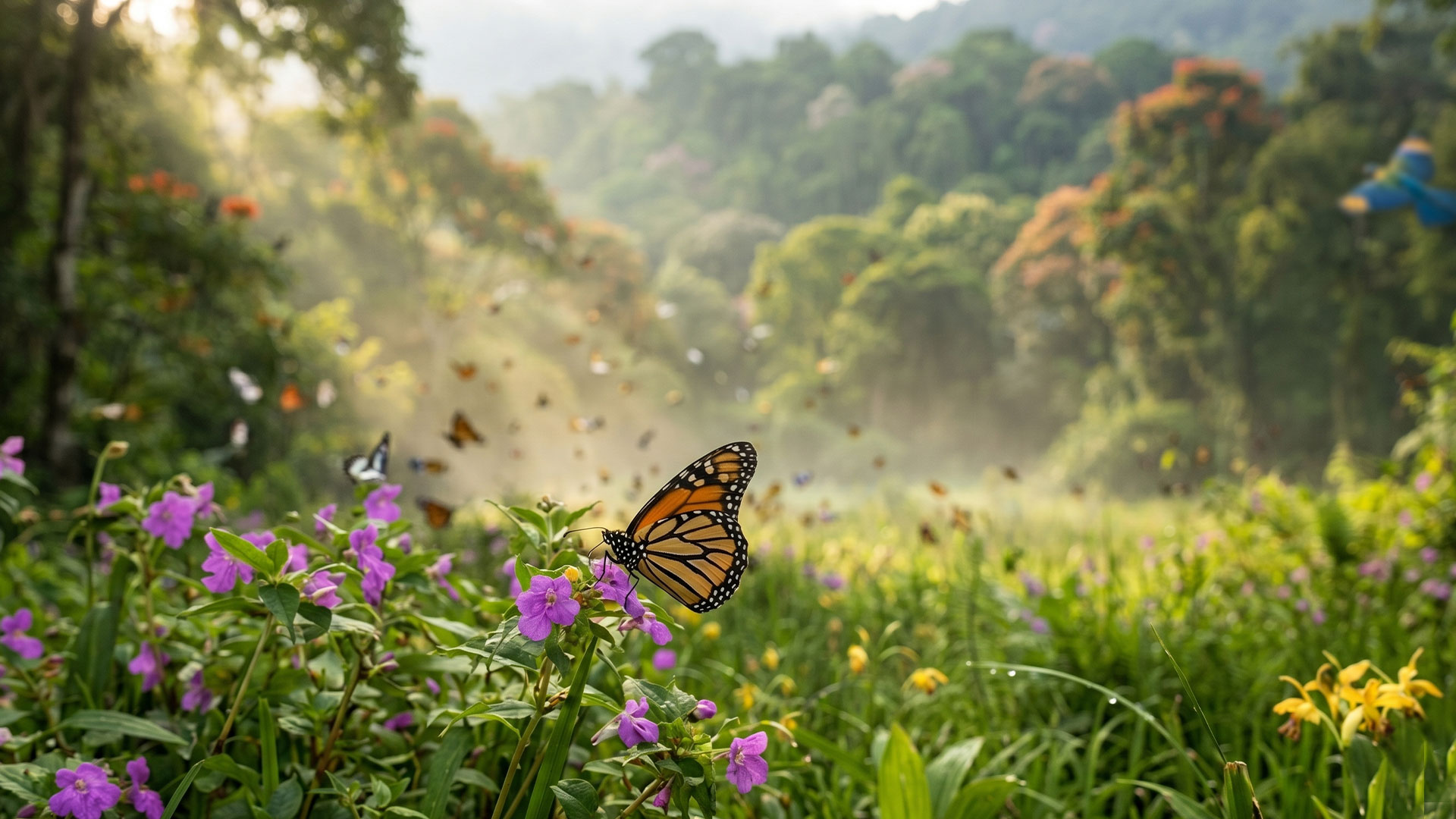
Seasonal Nature Events in Uganda: When to Witness Butterfly Migrations, Bird-Song Peaks & Blooming Forests

Kruti Verma
Date: Nov. 24, 2025
Uganda—known as the “Pearl of Africa”—is admired for its wildlife, lush landscapes, and mountain gorillas. Beyond the big mammals lie subtler seasonal events that bring forests, wetlands, and wildlife alive in spectacular ways. From fluttering butterflies to migratory birds to forests bursting into bloom—timing your visit right means being in the right place at the right moment. Here’s a guide to three key phenomena and how to plan your visit.
1. Bird-Song Peaks & Migratory Influx
Why bird seasonality matters in Uganda
Uganda hosts both resident and migratory bird species, creating periods when skies, wetlands, and forests come alive with wings and song.
Key migrant waves & best times
- October to April: Afro-Palearctic migratory birds arrive escaping northern winters.
- Dry season windows (Dec–Feb, Jun–Aug): Trails and wetlands accessible, vegetation less dense.
- Wet season (Mar–May, Sep–Nov): Breeding begins and insects surge, creating vivid bird-song.
Top places to watch
- Queen Elizabeth National Park: Over 600 species; migrants Oct–Mar.
- Murchison Falls National Park: Riverine, woodland, and wetland habitats.
- Mabamba Swamp: Rare shoebill and migratory waterbirds.
Tips & what to expect
- Early mornings are prime for bird activity.
- Bring binoculars and a guide.
- Choose the right environment: wetlands, forest edge, or savannah.
- Combine birding with other nature activities.
Best timing summary
- Nov–Apr: Best for migratory + resident birds.
- Dec–Feb & Jun–Aug: Best access, good visibility.
- Mar–May & Sep–Nov: Great for forest bird activity (trails may be muddy).
2. Butterfly Waves & Insect Phenomena
Why butterflies matter
Butterflies indicate habitat changes, flowering, rains, and insect populations. Uganda’s forests hold hundreds of species with seasonal peaks.
Seasonal patterns
- Wet seasons (peaks Oct & Apr) have highest butterfly diversity; lowest in height of dry seasons.
- Dry seasons (Aug & Feb) offer accessible trails in forests like Bwindi.
- Trails near open glades, rotting fruit, or tree sap provide observation hotspots.
Prime locations & timing
- Bwindi Impenetrable National Park: Over 200 species; dry periods (Jun–Aug, Dec–Feb).
- Semuliki National Park: Lowland rainforest; dry season accessible trails.
- Budongo Forest: Forest edge trails, Royal Mile trail; Apr–Jun, late Oct.
Tips & what to look out for
- Bring macro lens or camera with zoom.
- Walk quietly; observe trunks, stems, clearings, rotting logs.
- Early morning & late afternoon best for activity.
- Be flexible with weather; link walks with birding or primate observation.
Best timing summary
- Mar–May & Sep–Nov: Flushes after rains.
- Jun–Aug & Dec–Feb: Accessible trails, dry season conditions.
- Peak visual abundance: turn of rainy to dry season.
3. Blooming Forests & Leaf-Flush Phenomena
What we mean by “blooming forests”
Montane and equatorial forests have periods when many trees flower, flush new leaves, and canopies take on fresh green or colourful hues.
Research insights
- Highlands of Southwest Uganda: Flower peaks at start of short dry season; leaf flush peaks end of wet season (Nov–Dec).
- March–May: Landscapes deeply verdant, flowers bloom, forest “green scape” vivid.
Where to witness
- Bwindi Impenetrable Forest: Nov–Dec or post-rains.
- Mount Rwenzori Range: Jul–Aug flowering of alpine flora.
- Forest corridors/trails: Early morning walks to see new leaf colours & flowers.
Tips & what to expect
- Colour may be subtle, but canopy freshness is striking.
- Bring field/local plant guide.
- Early morning ideal for light through new leaves.
- Dry season transitions easier for trekking.
- Combine with birding or butterfly walks.
Best timing summary
- Short dry season (Nov–Dec): Leaf flush & flowering.
- After long rains (Mar–May): Lush landscapes & flowers.
- High-altitude zones (Rwenzori Jul–Aug): Alpine flora displays.
Putting It All Together: Planning Your Trip
Suggested seasonal windows
- Mar–May: Long rains, forest flowering, butterflies, bird breeding; trails may be slippery.
- Jun–Aug: Dry season, accessible forest trails, birding, moderate crowds.
- Nov–Dec: Short dry season, forest flowering, leaf flush, bird activity.
- Oct: Migrants begin arriving; wetlands & lakesides active for birders.
Sample itinerary ideas
- Forest walk (Bwindi/Rwenzori) in Nov–Dec for leaf flush & birding.
- Wetland birding (Mabamba Swamp) early morning + butterfly walk later.
- Families/mixed-interest: Jun–Aug for general nature tourism.
- Insect/plant enthusiasts: Apr or Oct for butterfly emergence & forest growth.
Tips for travellers
- Pack light rain jacket, walking shoes, insect repellent, binoculars, macro lens.
- Hire local guide for birds, butterflies, forest plants.
- Respect trail conditions; plan for muddy trails post-rain.
- Stay at least 2–3 nights to catch seasonal peaks.
Why These Seasonal Events Matter
- Biodiversity signalling: Migratory birds & butterfly waves reflect healthy ecosystems.
- Phenology & climate link: Leaf flush & bloom timing shows ecosystem response.
- Added value for tourism: Adds depth beyond “big five”.
- Awareness & conservation: Raises appreciation for forest & wetland protection.
A Few Cautions & Considerations
- Events are subtle, localized, and spread out—no Serengeti-style macro-migration.
- Rainfall patterns & climate change can shift timings.
- Access restrictions may apply due to conservation rules or permits.
- Leaf flush may not produce dramatic flower carpets but still holds interest.
Timing your Uganda trip for migratory birds, butterflies, and forest leaf flushes allows you to experience the country’s living ecosystem in motion. Listen to dawn choruses, watch butterflies, and enjoy fresh leaves in morning light—Uganda’s nature follows its own calendar, offering memories beyond ordinary wildlife viewing.