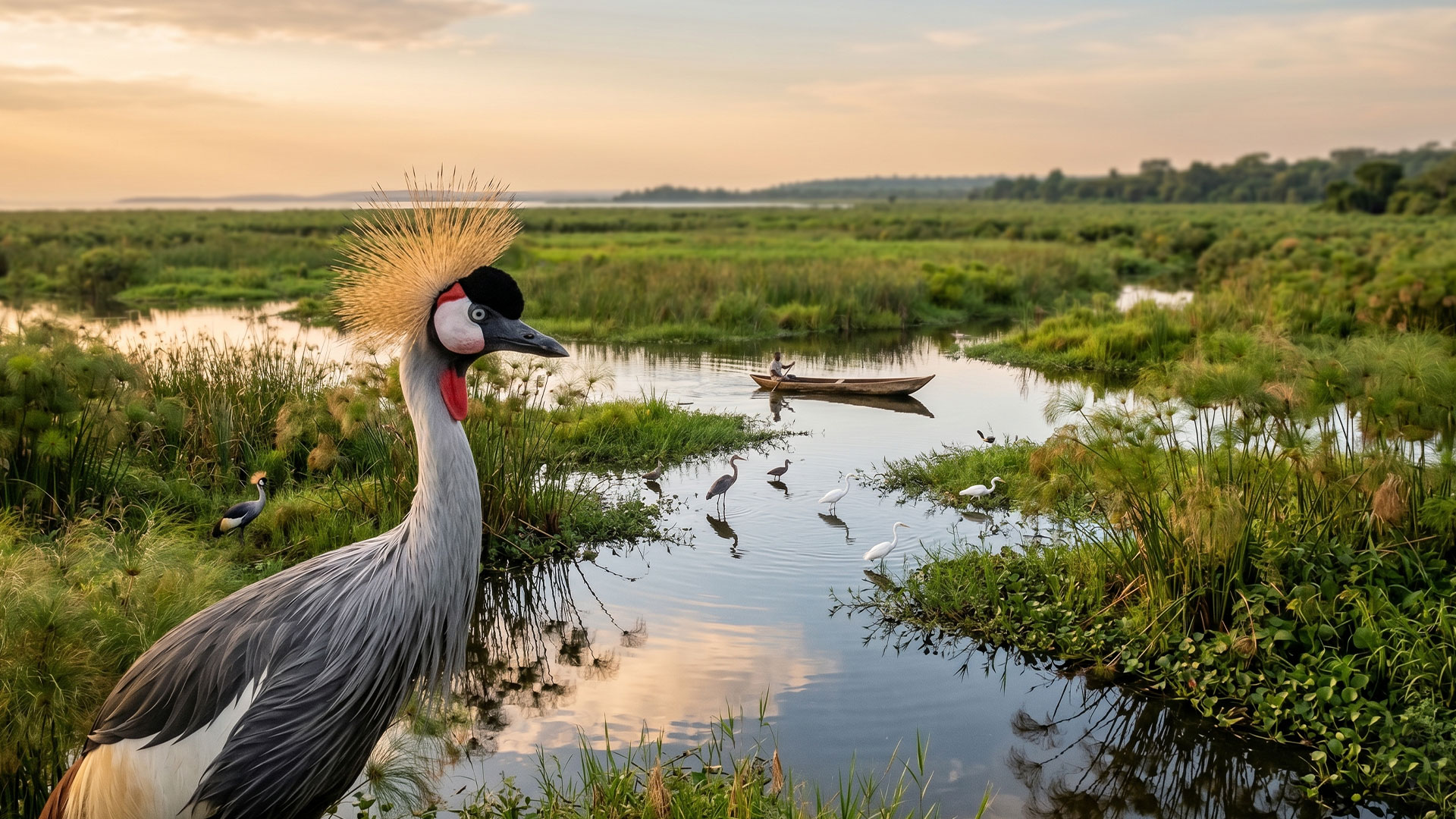
Wetlands and Swamp Ecosystems in Uganda Exploring Uganda’s Marshes, Swamps, and Lakeshores, Their Biodiversity, Importance, and Responsible Ecotourism

Admin
Date: Dec. 29, 2025
Uganda’s Wetlands: The Hidden Heart of Nature
Uganda is known for its wildlife, national parks, and lakes. But beyond the savannahs and forests, Uganda’s wetlands, swamps, and marshes are equally important. These ecosystems are home to unique biodiversity, protect the environment, and support communities.
Wetlands might look calm or quiet, but they are alive with birds, fish, amphibians, plants, and even insects. They act as natural water filters, flood controllers, and carbon sinks, making them essential for both nature and people.
This article explores Uganda’s wetlands, their significance, the wildlife they support, and how visitors can enjoy them responsibly.
1. What Are Wetlands and Swamps?
Wetlands are areas where land is saturated with water, either permanently or seasonally. They include:
- Swamps – dominated by trees and shrubs
- Marshes – dominated by grasses and reeds
- Lakeshores and riverbanks – transitional zones between land and water
Wetlands in Uganda are spread across central, western, and northern regions, forming a complex network that sustains life and human livelihoods.
2. Major Wetlands and Swamp Ecosystems in Uganda
a) Mabamba Bay Wetland
- Located near Entebbe, along Lake Victoria
- Famous for birdwatching, including the rare Shoebill Stork
- Reeds, papyrus, and fish are abundant
b) Nabajjuzi Wetland
- Central Uganda, near Mpigi
- Supports communities with fishing and papyrus harvesting
- A habitat for frogs, waterbirds, and butterflies
c) Katonga Wetland
- Western Uganda, near Mubende
- Covers rivers, swamps, and grasslands
- Home to hippopotamuses, crocodiles, and waterfowl
d) Rwenzori Lakeshores and Swamps
- In western Uganda near the Rwenzori Mountains
- High-altitude wetlands with rare plant species
- Supports mountain wildlife and water regulation
e) Nyamwamba and Other Small Swamps
- Found throughout central and western Uganda
- Provide flood control and water purification
3. Biodiversity in Uganda’s Wetlands
a) Birds
- Shoebill Stork, Herons, Kingfishers, Jacanas, Ducks
- Important for birdwatchers and ecotourism
b) Mammals
- Hippopotamuses, otters, and occasionally elephants
- Small rodents and bats live in marshy areas
c) Reptiles and Amphibians
- Crocodiles, snakes, and frogs thrive in wetlands
- Unique amphibians are indicators of healthy ecosystems
d) Aquatic Life
- Fish species, shrimps, and insects support fisheries
e) Plants
- Papyrus, water lilies, reeds, and wetland grasses
- Provide raw materials for local crafts, roofing, and fuel
Wetlands support life both above and below water, creating a delicate but resilient ecosystem.
4. Importance of Wetlands
a) Environmental Benefits
- Water purification – wetlands filter sediments and pollutants
- Flood control – act as natural sponges during heavy rains
- Carbon storage – papyrus and swamp plants capture carbon
b) Economic Benefits
- Fishing supports local livelihoods
- Papyrus and reeds are used for mats, baskets, and roofing
- Wetland tourism generates income for local communities
c) Cultural Significance
- Many wetlands are culturally sacred
- Communities have rituals, stories, and traditional knowledge linked to wetlands
5. Threats to Wetlands
- Drainage for agriculture – conversion into farms reduces wetland area
- Pollution – industrial, agricultural, and domestic waste
- Overfishing and overharvesting – affects biodiversity
- Climate change – alters rainfall patterns and water levels
- Urban expansion – especially around Kampala and Entebbe
Conservation is critical to ensure wetlands continue providing ecological, economic, and cultural benefits.
6. Responsible Ecotourism in Wetlands
a) Birdwatching Tours
- Mabamba Bay and Nabajjuzi are ideal for observing rare birds
- Hire local guides who know the wetlands well
b) Canoeing and Boat Trips
- Explore swamps and lakeshores in canoes
- Supports local tourism businesses and creates jobs
c) Nature Photography
- Wetlands offer unique landscapes, birds, and wildlife
- Photography tours promote environmental awareness
d) Community Visits
- Learn about papyrus harvesting and traditional crafts
- Supports local artisans and preserves culture
Visitors should follow leave-no-trace principles, avoid littering, and respect wildlife.
7. Wetlands and Community Livelihoods
- Fishing and Aquaculture – Wetlands support small-scale fisheries
- Crafts and Materials – Papyrus mats, reeds, and handmade goods
- Medicinal Plants – Some wetland plants are used in herbal remedies
- Tourism Jobs – Guides, boat operators, and cultural experiences
Sustainable wetland management ensures that communities continue to benefit economically without destroying ecosystems.
8. Conservation Efforts in Uganda
- National Wetlands Programme – educates communities and enforces protection laws
- UNDP and Wetlands International – support restoration and sustainable use
- Community-based management – locals participate in monitoring and sustainable harvesting
- Ecotourism promotion – generates income while preserving ecosystems
Community engagement is key; people who benefit from wetlands naturally become their strongest protectors.
9. Tips for Visiting Wetlands
- Hire local guides – they know the ecosystem and safety rules
- Wear suitable clothing – waterproof shoes, long sleeves, and sun protection
- Carry insect repellent – wetlands often have mosquitoes
- Respect wildlife – don’t disturb birds, fish, or amphibians
- Avoid littering – take everything you brought with you
- Support local businesses – buy crafts and meals from nearby communities
Uganda’s wetlands, swamps, and lakeshores are hidden gems of biodiversity and culture. They provide:
- A haven for wildlife – from rare birds to fish and amphibians
- Economic resources – for fishing, crafts, and ecotourism
- Environmental services – water purification, flood control, and carbon storage
- Cultural and social value – traditional rituals, crafts, and community livelihoods
Visiting these ecosystems responsibly helps preserve them for future generations, while supporting local communities. Wetlands are not just landscapes; they are living, breathing ecosystems that connect nature, people, and culture.
Whether you are a birdwatcher, nature lover, photographer, or traveler seeking authentic experiences, Uganda’s wetlands offer unforgettable encounters with nature.
Protect them, explore them, and learn from them — because Uganda’s swamps and marshes are treasures waiting to be discovered.